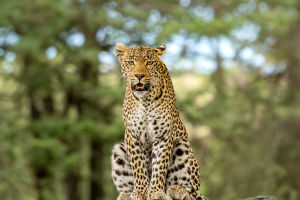
Watching a leopard drag a fresh prey up a tree is mesmerizing. It's not just strength on display—it's strategy, timing, and skill all rolled into one.
These big cats have mastered the art of keeping their food safe from competitors while managing feats that seem impossible for their size.
Understanding how leopards carry prey up trees reveals not only their physical prowess but also their survival strategies in the wild.
Why Leopards Use Trees
Leopards aren't just climbing for fun. Trees serve multiple purposes in the life of a predator.
1. Protecting the prey from scavengers
Once a leopard has hunted, the real challenge begins. Other predators like lions or hyenas can easily steal prey on the ground. By hoisting the prey into a tree, leopards ensure that they have private access to the meal for several hours or even days. For example, researchers have documented leopards storing medium-sized antelopes high in branches where hyenas can't reach.
2. Creating a safe feeding zone
The branches act like a natural dining table. This elevated space reduces stress for the leopard because it's away from ground-level threats. Cubs can eat under the parent's watchful eye without interference, which increases their survival chances.
Techniques for Lifting Heavy Prey
It's not just brute force. Leopards use a combination of physics, leverage, and body control to get their prey off the ground.
1. Adjusting the grip
A leopard usually bites the prey behind the neck or shoulders, where the vertebrae allow a secure hold. By finding this precise spot, it maximizes the strength of its jaw and front limbs. Practically, this is similar to how humans lift a heavy bag by holding it near the strongest point rather than the weakest.
2. Using the body as a lever
Leopards often lift their prey incrementally, nudging it onto a lower branch first, then climbing with it step by step. Each movement conserves energy and reduces the risk of dropping the prey. This stepwise strategy shows that leopards understand balance and leverage intuitively, making them expert climbers.
3. Timing the climb
Leopards typically choose times when competition is low, like midday or early evening. Observing the behavior of nearby scavengers informs the leopard when it's safe to transport its prey. A practical takeaway is that timing and planning often matter more than raw strength when handling heavy loads.
Role of Cubs in Learning This Skill
Leopard cubs watch their mothers carefully. This observational learning is critical to survival.
1. Imitating the process
Cubs practice dragging smaller prey or objects around the den area, gradually learning to balance and coordinate movements. Over time, they tackle more challenging tasks under guidance.
2. Learning positioning and grip
By observing how the mother bites and positions the prey, cubs internalize techniques that maximize efficiency. For instance, cubs see that starting near a tree trunk provides stability, teaching them an instinctive understanding of leverage.
3. Reinforcing problem-solving
Each attempt to lift, adjust, or reposition prey teaches cubs trial-and-error problem-solving. By the time they hunt independently, these lessons have honed both physical skills and strategic thinking.
Adaptations That Make It Possible
Leopards are physically built for these feats.
1. Muscular strength and flexibility
Their forelimbs are extraordinarily strong relative to their body weight, and their spines are flexible, allowing them to twist and balance prey as they climb. A leopard carrying a 40-50 kg antelope illustrates strength beyond what size alone would suggest.
2. Claw structure
Retractable claws give both grip and protection, letting leopards hook into bark firmly while minimizing energy loss during the climb. Observing this shows how evolution shapes both function and efficiency.
3. Stealth and precision
Even while exerting massive strength, leopards move carefully to avoid attracting attention. Their silent climbing reduces the chance of a rival noticing, emphasizing that strategy complements power.
Watching leopards hoist their prey into trees highlights a blend of intelligence, strength, and learned skill. Each catch becomes a lesson in strategy for the next generation, showing that survival in the wild is about more than speed—it's about knowledge, timing, and technique.
Seeing a leopard on a tree branch, clutching its meal, reminds us that nature's experts often combine brains with brawn. Observing these behaviors can inspire a deeper appreciation for wildlife and the subtle strategies that keep these animals alive day after day.